


Inspection Based on the Approved Specification
Candle jar inspection begins with a confirmed product specification and approved physical sample. The reference should define the jar dimensions, capacity, glass appearance, surface finish, logo position, lid fit and packaging method.
Glavique applies checks at relevant production stages rather than relying only on a final inspection after the goods are packed. Inspection points vary according to whether the order uses a standard clear jar, custom coating, printed decoration, matched lids or branded packaging.
Buyers should provide any special acceptance criteria before quotation and sampling. Requirements introduced after bulk production may affect the inspection schedule, testing cost and delivery date.
Forming and Base Glass Checks
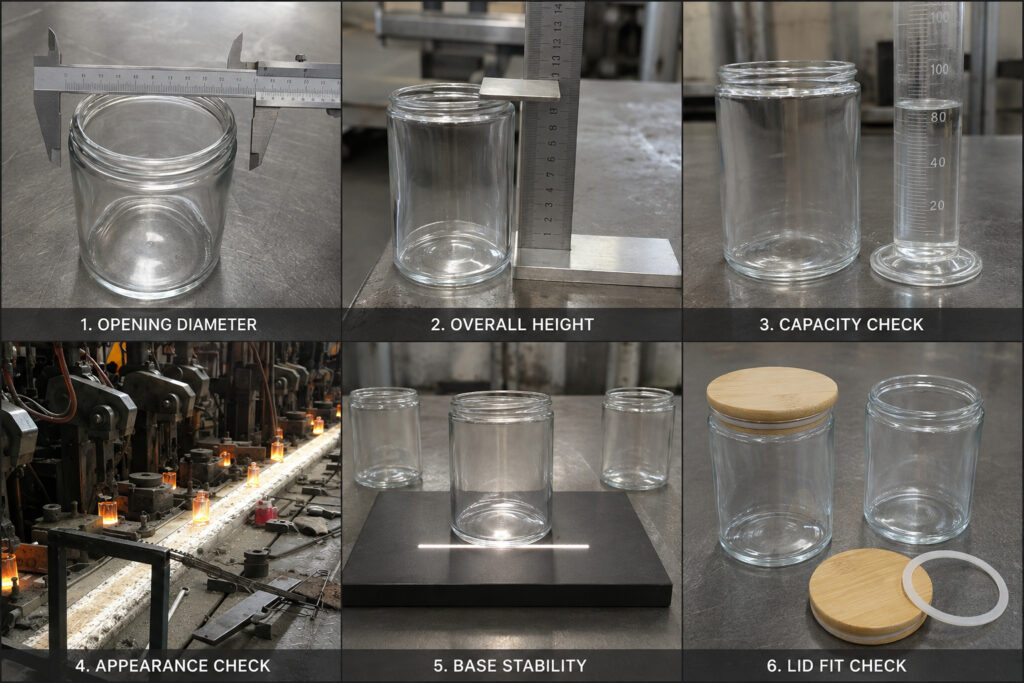
Inspection begins during glass forming. Routine checks focus on the jar shape, rim condition, base stability, wall distribution and visible forming defects. Jars with obvious distortion, damaged openings or unstable bases are separated before downstream finishing.
Critical dimensions may include overall height, body diameter, opening diameter and lid-contact areas. These dimensions are particularly important when jars must match existing lids, labels, filling equipment or retail packaging.
After forming, jars pass through Annealing & Cooling before surface finishing and decoration.
Dimensional and Capacity Inspection
Dimensional checks compare production jars with the approved drawing or sample. Metal calipers, gauges and other appropriate measuring tools can be used according to the required dimension.
Capacity should be defined clearly because nominal candle capacity, water capacity and recommended wax fill may not represent the same measurement. Buyers should state which capacity definition is required when submitting a new jar specification.
For lid-matched programs, the opening and rim should be checked together with the intended lid and sealing component. Nominal dimensions alone do not confirm practical fit.
 Annealing and Structural Testing
Controlled annealing helps reduce internal stress created during glass forming and cooling. Routine production checks consider the jar condition after annealing, while annealing-stress or thermal-shock testing can be arranged when required by the buyer specification.
The required test method, temperature conditions, sample quantity and acceptance standard should be confirmed before production. A general request for “heat-resistant glass” is not sufficient because actual test conditions can vary by intended use and market.
Testing cannot replace correct candle design and burn testing by the candle producer. Buyers filling the jars with wax should evaluate the complete candle system, including wax, wick, fragrance load, fill level and burning conditions.
Finish, Color and Logo Inspection
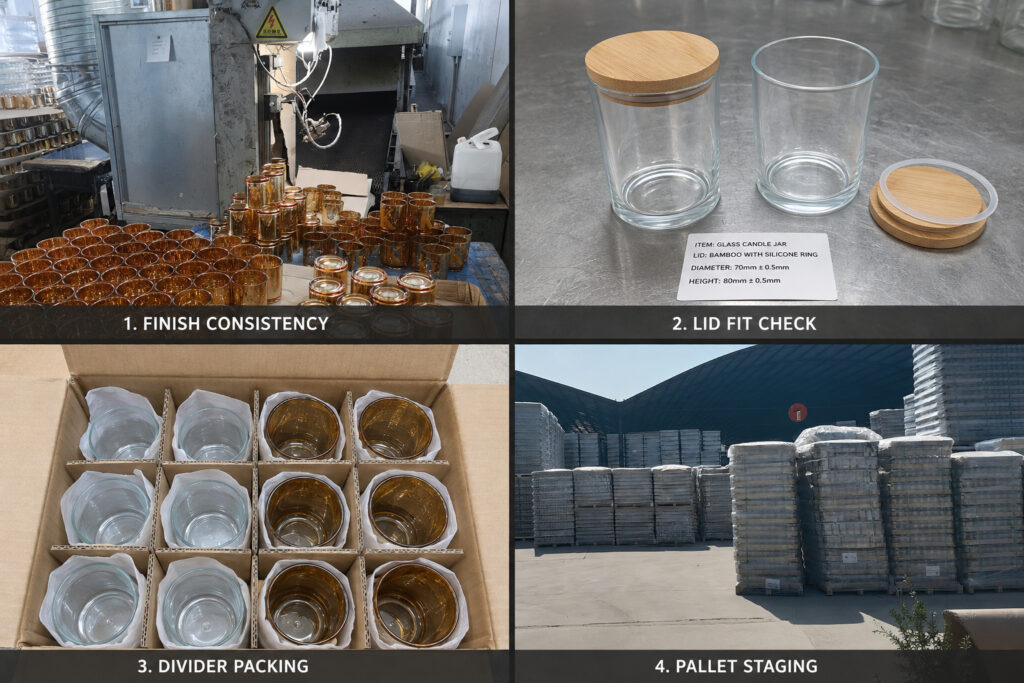
Customized finishes are compared with the approved physical sample for color, coverage, texture and visible surface marks. Frosted, matte, spray-coated and metallic effects may appear different under changing light, so samples and bulk goods should be assessed under reasonably consistent conditions.
Logo inspection covers position, size, clarity, color, registration and general adhesion. The relevant method depends on whether the decoration uses silk-screen printing, decals or hot stamping.
Further process information is available on Logo Printing & Decoration.
Lid, Quantity and Packaging Checks
Wood, bamboo, metal and glass lids are checked against the selected jar opening. Inspection may cover fit, alignment, sealing-ring placement and visible appearance according to the approved specification.
Before shipment, checks include product quantity, inner protection, carton condition, shipping marks and pallet arrangement where applicable. Packing should reflect the jar weight, shape, finish and shipping route.
The Export Packing & Palletizing page explains available protection for bulk glass candle jar shipments.
 Third-Party Inspection and Testing Support
SGS or other third-party testing can be arranged for specific products and destination markets when required. Possible items may include food-contact, heavy-metal, thermal-shock or packaging-related tests, depending on the buyer’s specification.
Third-party inspection can also be coordinated before shipment. Buyers should confirm the inspection agency, sampling plan, report requirements and booking procedure in advance.
Information Needed to Confirm an Inspection Plan
Provide the approved sample or drawing, quantity per SKU, critical dimensions, finish and logo requirements, lid specification, packaging standard and destination market. Also identify any mandatory testing method or third-party inspection requirement.
Clear inspection criteria allow the quotation, sample approval, bulk production and shipment schedule to be planned against the same requirements.