


Logo Decoration for Branded Candle Jar Programs
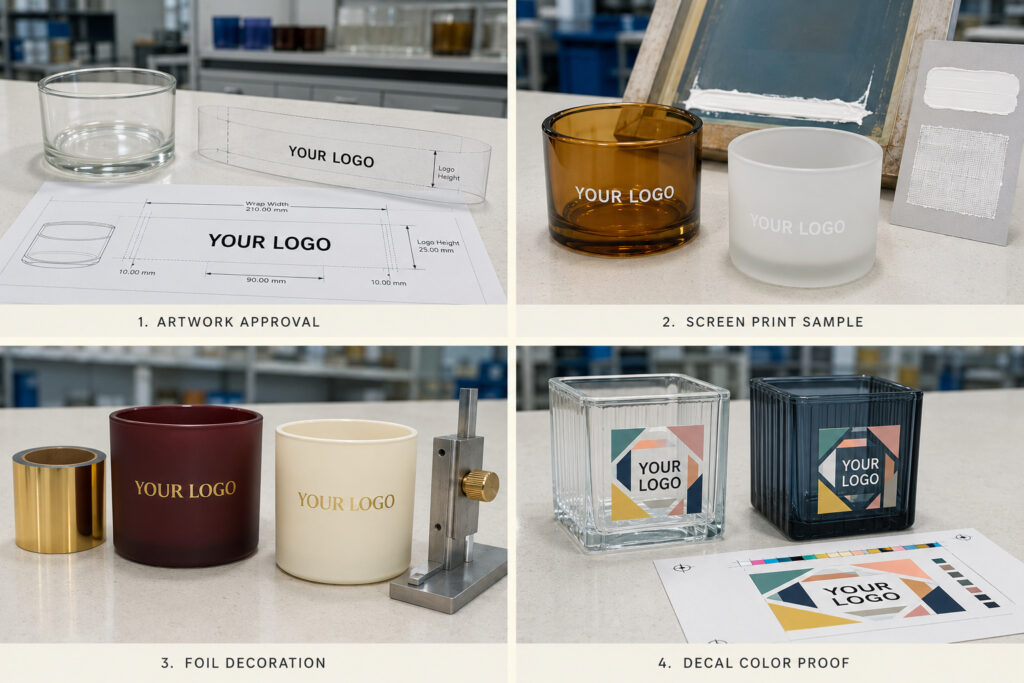
Glavique Candleware supports custom logo development for candle brands, contract fillers, importers, packaging suppliers and private-label container programs. Available decoration methods include silk-screen printing, decal application and hot stamping, depending on the jar material, surface finish, artwork and required appearance.
Logo development should begin after the jar shape, dimensions and surface finish have been confirmed. A decoration process that performs well on clear glass may produce a different result on frosted, matte or spray-coated glass. The available printing area and jar curvature must also be reviewed before artwork approval.
Our service covers decoration of empty candle containers. It does not include wax filling, fragrance development or finished candle labeling unless specifically confirmed as part of the packaging project.
Artwork and Print-Area Confirmation
Buyers should provide vector artwork in AI, EPS or editable PDF format whenever possible. The file should include the required logo size, print colors, position and any Pantone references.
Before sampling, Glavique reviews:
- Jar model and surface finish
- Printable width and height
- Logo size and position
- Number of print colors
- Artwork line thickness
- Registration requirements
- Metallic or special effects
- Quantity per design or SKU
Fine lines, small text and multi-color graphics may need adjustment to remain clear on a curved glass surface. A flat digital proof can confirm layout, but the final appearance should be approved on a physical jar.
 Silk-Screen Printing
Silk-screen printing is commonly used for simple logos, text and limited-color designs. It can provide a clean and direct print on clear, amber, frosted or selected coated glass surfaces.
The ink system, curing conditions and screen setup depend on the jar finish and artwork. Buyers should confirm print color, opacity and contrast against the actual jar. White ink on amber glass, for example, will appear different from the same ink on matte black or frosted glass.
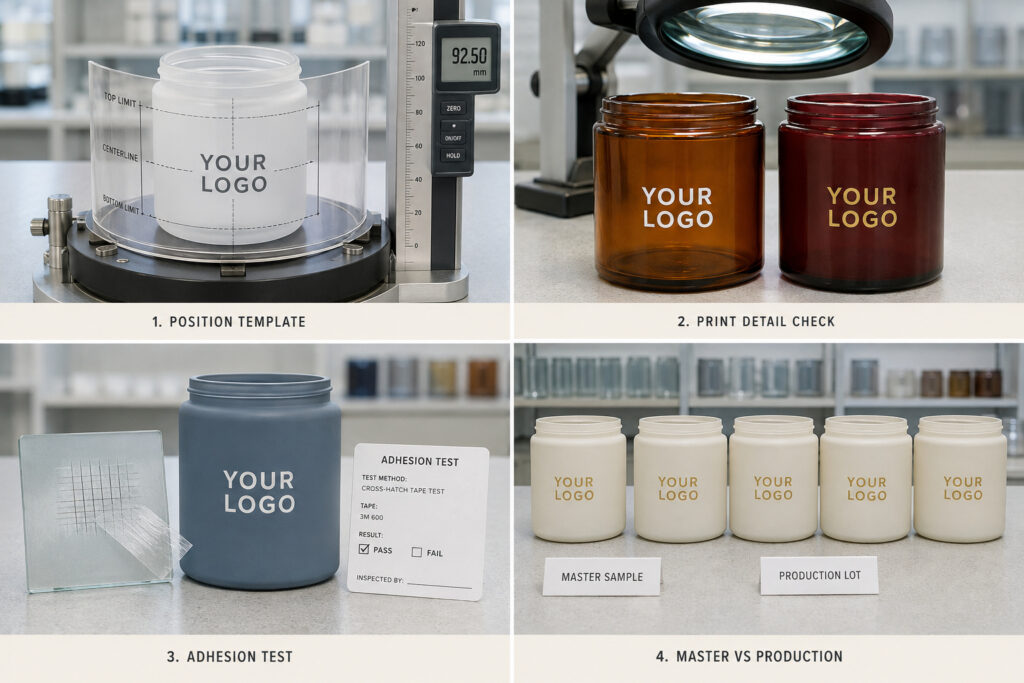
During inspection, Glavique checks print position, clarity, missing ink, smudging, registration and consistency across the production lot.
More manufacturing details are available on the logo printing and decoration page.
Decal and Hot-Stamp Decoration
Decals may be considered for detailed graphics, multiple colors or artwork that is less suitable for direct screen printing. The decal layout, edge visibility, transfer position and curing requirements should be reviewed on a physical sample.
Hot stamping creates a metallic effect, commonly in gold, silver or selected foil colors. It is generally better suited to controlled logo areas and relatively simple artwork. Jar curvature, surface texture and foil contact can affect coverage and edge definition.
The decoration method should be selected together with the custom color and surface finish because coating texture and curing conditions can influence print adhesion and appearance.
Decoration Samples and Bulk Approval
Customized logo samples normally require around 7–15 days after the jar, finish and artwork have been confirmed. Sampling time may increase for multi-color artwork, specialized foil, combined finishes or new mold projects.
The approval sample should confirm:
- Logo size and position
- Print or foil color
- Artwork clarity
- Registration
- Surface compatibility
- Acceptable appearance tolerance
- Lid and label coordination
 MOQ, Lead Time and Quote Requirements
Custom logo projects commonly start around 3,000–5,000 pieces, depending on the jar, decoration method, number of colors and quantity per design. Regular bulk production is generally around 25–35 days after sample approval. Complex decoration, special finishes or new molds may require around 35–45 days.
For evaluation, send the jar model, order quantity per design, vector artwork, logo dimensions, color references, preferred decoration method, lid, packaging and delivery requirements.
These details allow Glavique to confirm print feasibility, sample cost, MOQ, inspection criteria and production schedule through the broader Custom & OEM process.