


Packing Designed Around the Jar and Shipping Route
Glass candle jars require packing that protects the rim, body, base and surface finish throughout warehouse handling, container loading and international transportation. The suitable packing method depends on jar weight, shape, finish, lid configuration, quantity and shipping route.
Glavique can coordinate individual protection, paper dividers, inner cartons, master cartons and palletized packing for wholesale and OEM orders. Packaging is confirmed against the approved jar, lid and order specification rather than selected only by carton dimensions.
Buyers should state whether the shipment will move by sea, air, courier or combined delivery. Handling conditions differ, and the packing plan may affect carton quantity, pallet dimensions, freight volume and total landed cost.
Individual Jar Protection
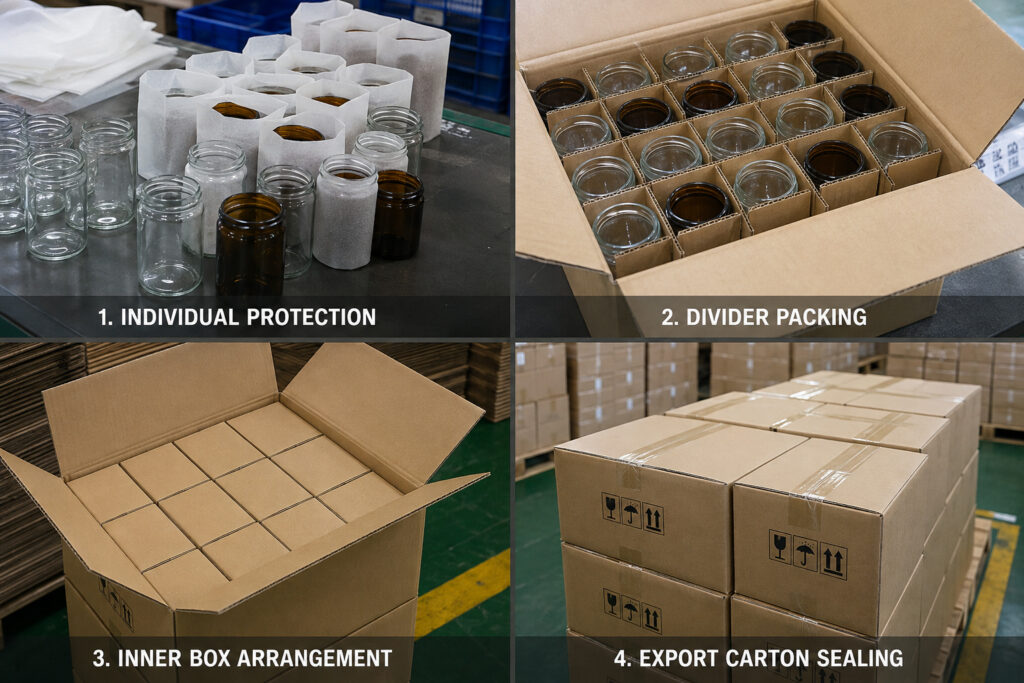
Clear standard jars may use paper dividers or protective sleeves according to the design and carton arrangement. Frosted, matte, spray-coated and metallic jars may require additional surface protection to reduce rubbing, scratches or finish transfer during transit.
Each jar should be positioned so that direct glass-to-glass contact is minimized. Dividers must fit the jar diameter and carton structure without allowing excessive movement.
Lids may be fitted to jars or packed separately, depending on lid material, sealing-ring structure and risk of surface damage. The final arrangement should be checked during packaging sample approval.
Paper Dividers and Carton Structure
Corrugated paper dividers separate jars inside the carton and help distribute handling pressure. Divider cell size should match the jar body while leaving enough space for any sleeve or individual protection.
Carton strength and dimensions should be selected according to the packed weight and stacking requirement. An oversized carton may allow movement, while an overloaded carton can increase the risk of deformation or handling damage.
For branded retail or private-label programs, individual boxes and inner packaging can be developed through Custom Packaging. Branded packaging still requires an appropriate outer export carton.
 Carton Quantity and Shipping Mark Checks
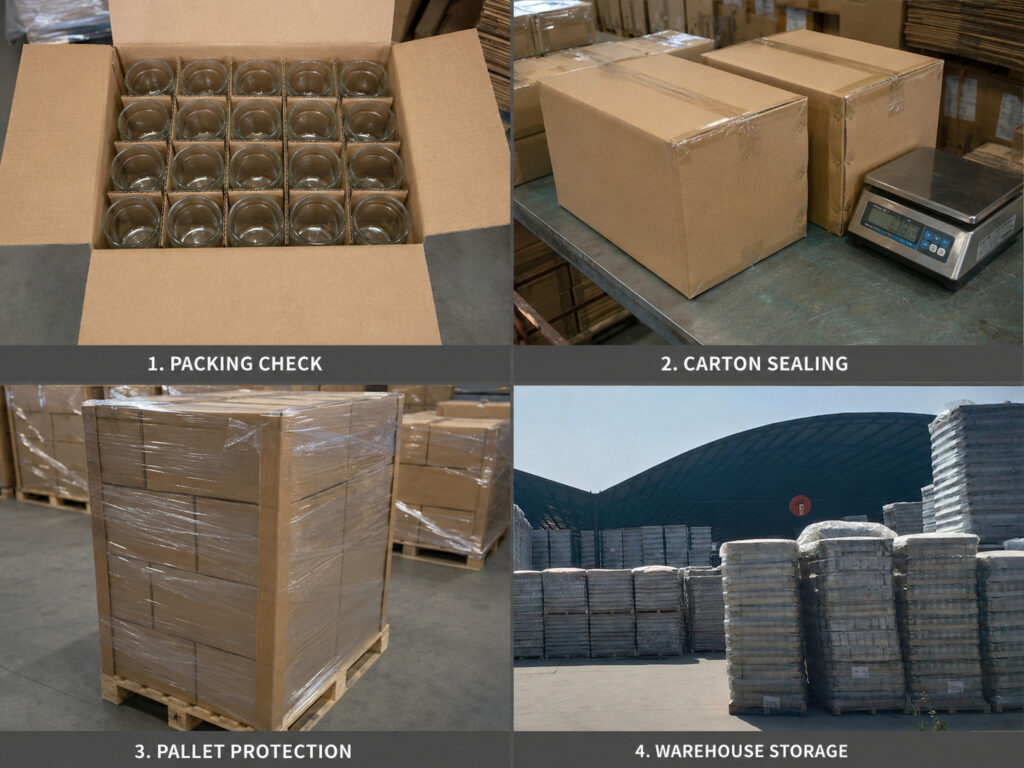
Before shipment, the packing team checks the product quantity per carton, carton count, carton condition and required shipping marks. Shipping marks may include product identification, quantity, gross weight, net weight, carton dimensions and handling symbols where applicable.
Buyer-specific carton labels, barcodes or destination marks should be provided before packing begins. Late changes may require relabeling or carton rework and can affect the shipment schedule.
The final packing list should correspond with the actual packed quantity and agreed SKU arrangement. Mixed-SKU cartons should be clearly identified if they are permitted by the buyer.
Palletizing for Export Orders
Palletizing can improve handling efficiency and provide additional protection for cartons during warehouse movement and international transportation. The decision to use pallets depends on the shipment size, destination, freight method and buyer requirements.
Cartons should be stacked in a stable pattern without excessive overhang. Corner boards, top sheets, strapping and stretch film may be used to improve load stability and protect carton edges.
Pallet dimensions, total height and gross weight influence freight volume and container utilization. Buyers comparing palletized and non-palletized quotations should consider both product protection and shipping cost.
Packaging and Shipment Checks
Finished cartons and pallets are reviewed before dispatch. Checks may cover carton quantity, shipping marks, sealing, visible carton damage, pallet condition and wrapping stability.
Packaging or drop-test arrangements can be discussed when required by the buyer or distribution program. The test method and acceptance criteria should be confirmed before bulk packing because they may affect carton materials and internal protection.
Inspection requirements should be coordinated through Quality Inspection & Testing before the shipment is booked.
 Shipping Terms and Export Preparation
Glavique supports EXW, FOB, CFR, CIF and DDP shipment arrangements depending on the destination and order requirements. The selected trade term affects which transport costs and delivery responsibilities are included in the quotation.
Before shipment planning, provide the destination country or port, preferred trade term, delivery deadline and any pallet, labeling or documentation requirements. Shipping cost cannot be estimated accurately without the final packing volume and gross weight.
Information Needed for a Packing Quote
Send the jar specification, quantity per SKU, finish, lid arrangement, individual box requirements, carton-mark details, destination and preferred shipping term. Also confirm whether pallet packing or a specific packaging test is required.
Packing samples should be approved together with the product when customized boxes, inserts or special protection are involved. This allows the bulk packing team to follow the same jar, lid and packaging reference throughout production and shipment preparation.